Center for Creative Ministry A research organization and research center for Seventh-day Adventist pastors and their congregations


Living in the Land
Could it be that Benjamin Franklin, one of the United States’ Founding Fathers and inventor of the lightning rod, bifocals, glass harmonica and the Franklin stove, also invented the first viral American meme?
Although we recognize July 4, 1776 as the day the American colonies united in the struggle for independence from Great Britain, Benjamin Franklin planted the seeds of colonial unity over 20 years earlier with an 18th century version of a modern-day meme.
In 1754, the 13 colonies were separate entities, divided by geography and culture, with little incentive to band together for a common goal. As the colonists entered the French and Indian War, Franklin felt the need to both unite the disparate colonies in the struggle and send a message to Britain that it was in its best interest to support a central American government. He published that message in his Pennsylvania Gazette newspaper, along with a graphic image of a snake, cut into 13 pieces—representing the 13 colonies—with the caption “Join, or Die.”
Once the graphic grabbed the attention of the paper’s readers, his accompanying article presented a sensational message, describing gangs of French and Indian raiders, pouring down from Canada to the western Ohio territory, with the purpose to “kill and scalp the Inhabitants, and ruin the Frontier Counties.”
While his message didn’t result in a united American government at the time, the graphic illustration went viral, as it excited the imaginations of many illiterate colonists who couldn’t read the editorial for themselves. It resurfaced 20 years later in the run toward independence.
In 1774, Paul Revere and others published various versions of the illustration in newspapers throughout the colonies to drum up support for rebellion against British rule. The battles of Lexington and Concord, and then the battle of Bunker Hill convinced American military leaders that the colonists needed a national army—rather than their current ragtag bands of state militias—to stand up to the mightiest fighting force in the world. The Second Continental Congress convened in May, 1775 and approved that measure.
It’s thought that Stephen Moylan first coined the label “United States of America” in a letter to Joseph Reed on January 2, 1776. The title reappears in a Philadelphia newspaper on June 29, 1776, when an anonymous writer, going by the signature “Republicus,” wrote “as we cannot offer terms of peace to Great-Britain, until we agree to call ourselves by some name, I shall rejoice to hear the title of the UNITED STATES OF AMERICA, in order that we may be on a proper footing to negociate [sic] a peace.” That name was codified a week later in the Declaration of Independence, and Franklin’s appeal to “join, or die,” began to see fruition.
When Joshua led the twelve tribes of Israel across the Jordan River into the Promised Land, they were loosely joined together with the common purpose of subduing the inhabitants and claiming the territory for themselves. That unity quickly threatened to unravel, however, once the tribes began settling into their apportioned colonies.
Not long after the tribes of Reuben, Gad, and the half tribe of Manasseh resettled on the east side of the Jordan—after they helped the others secure the military conquest of Canaan—they erected an altar. The nine-and-a-half tribes on the west side of the Jordan took that to mean that they were seceding from Israel and setting up their own worship center. Alarmed at the thought that God would punish the whole nation for the east side’s rebellion, the west sent a delegation to confront these (seemingly) seditious tribes.
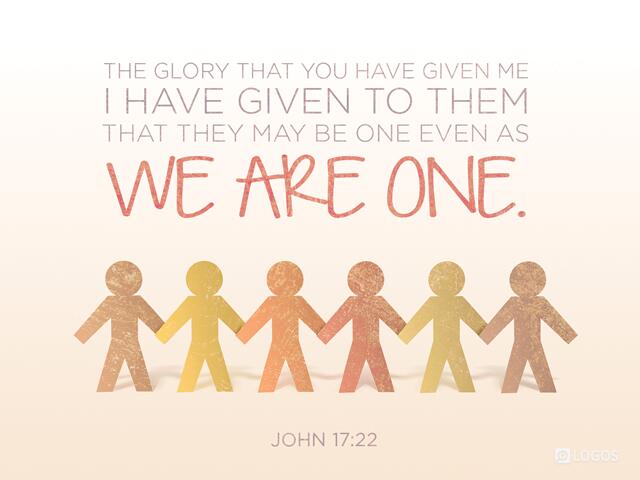
Once the eastern tribes calmly explained to their western relatives that they merely erected a memorial of their allegiance to God and Israel, the tensions subsided. Rather than attempting a split in the nation, the two-and-a-half tribes constructed the altar to express their desire for unity.
God, anticipating the human tendency toward conflict and division, set up the unifying system of national festivals to bring the tribes together in a spirit of worship and fellowship. Gathering together each year reinforced the tribes’ sense of unity as God’s people—not allegiant to human relations or authorities, but united in service to Yahweh alone.
For Reflection
Connecting: Recall a time when you saw Proverbs 15:1—“A gentle answer turns away wrath”—in action. Did you provide the “gentle answer” in this situation? Has someone else ever calmly soothed your wrath? Share whatever details you can with your group.
Sharing: What is the most effective strategy you know of to diffuse a volatile situation?
- Run away!
- Listen, listen, listen; then speak
- Keep a check on your own emotions. Is the situation making you feel anxious or angry?
- Take a step back and try and see all possible angles
- Sometimes I have to remove myself from the situation and let someone else deal with it
- Other:
Applying: The worldwide Seventh-day Adventist Church sometimes seems more polarized than ever. Is this the reality, or just a matter of perception? If it is so divided, what do you think will bring true unity to our global fellowship? How can/do you make a positive difference?
Valuing: Jesus said in Matthew 5:9, “Blessed are the peacemakers.” How are your peacemaking skills? Do you feel well prepared to bring harmony and unity to divisive situations? Make this a matter of prayer, if necessary.
~ Chuck Burkeen
|
|
|
|
|
|
|

|
|